A house in a cul-de-sac
“Your place was one block away
Street lights and power lines
Ask if the neighbor can play
Old creaky floor boards
Pencil marks all up the wall
Blink and then it's over
When did we all get so tall?
Goin goin goin gone
We're all here but not that long
The walls are bare the lights are off
A home's a home until it's not”
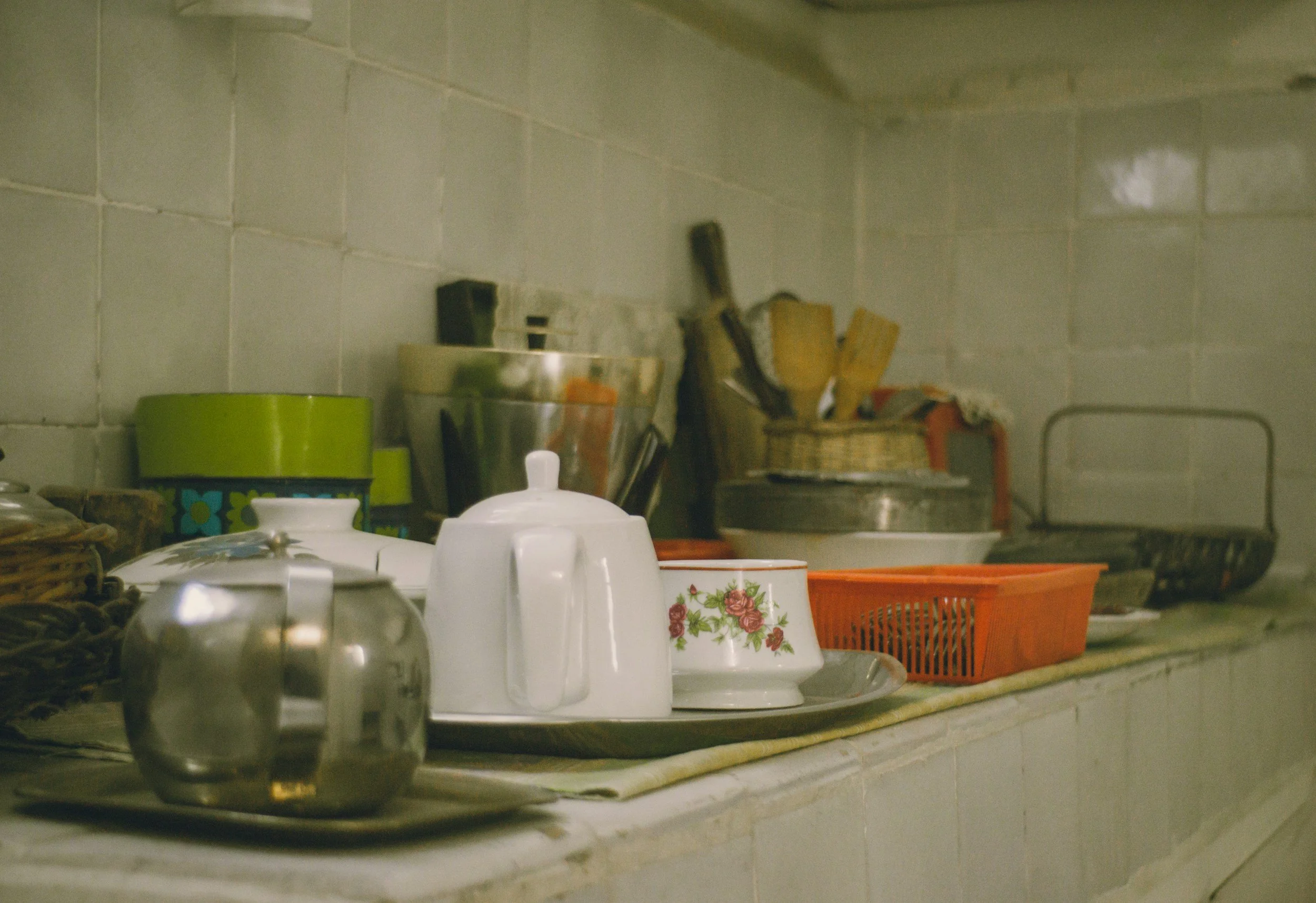
I have to turn the nobs many different times with varying pressure before the burners light in this old house I started renting three months ago with a few other classmates. The sung poetry of Whitney Hanson drifts down from where a speaker lays above the cabinet as I cook; no better word than lament exists to describe the nature of her work.
She mourns not only a sense of home, but the impermanence of this home itself. For her, whether or not the home exists physically, it stops existing in relationship to a growing person in a significant enough way to provoke this mourning as if it had truly dissipated. She ends this passage with a comment about the way a home can become a home no longer, not only because of the people leaving, but because of the way a house can be stripped of everything that characterized it as your home in your memories. The memories have become ghosts, dancing around with no material anchors to the site. Hanson essentially links the loss of childhood, the passing of time, and human mortality to this transient and sought after sense of home.
John E Annison concurs with Hanson’s assertion about a home’s shifting status when he proposes that the legitimacy of a home depends on three qualities: a sense of place, a control over the home and necessary supports, and a security through tenancy and ownership (253). Annison’s work pertains to residences designated for those considered to be mentally or physically disabled enough to require special facilities, and he argues that while there are no concrete particulars that equate to a home, this word is constantly misapplied to insufficient non-homes. These residences carry an absence of home that is not nulled by just the word ‘home’ itself, and his three qualifications are an attempt to improve this uncomfortable situation for people in need of this kind of residential care. It is intriguing, though not surprising, that ownership is surfacing as a factor in inducing the sense of home—and though Hanson does not say this explicitly, it is present in her implications—if there is not enough of you, your stuff, or your friends around, than the home doesn’t feel like yours anymore. This is not a legal kind of ownership, but a sense of belonging that melds into one of dominion. Annison gets at a more practical sense of security, but he, too, includes Hanson’s message in his first qualification.