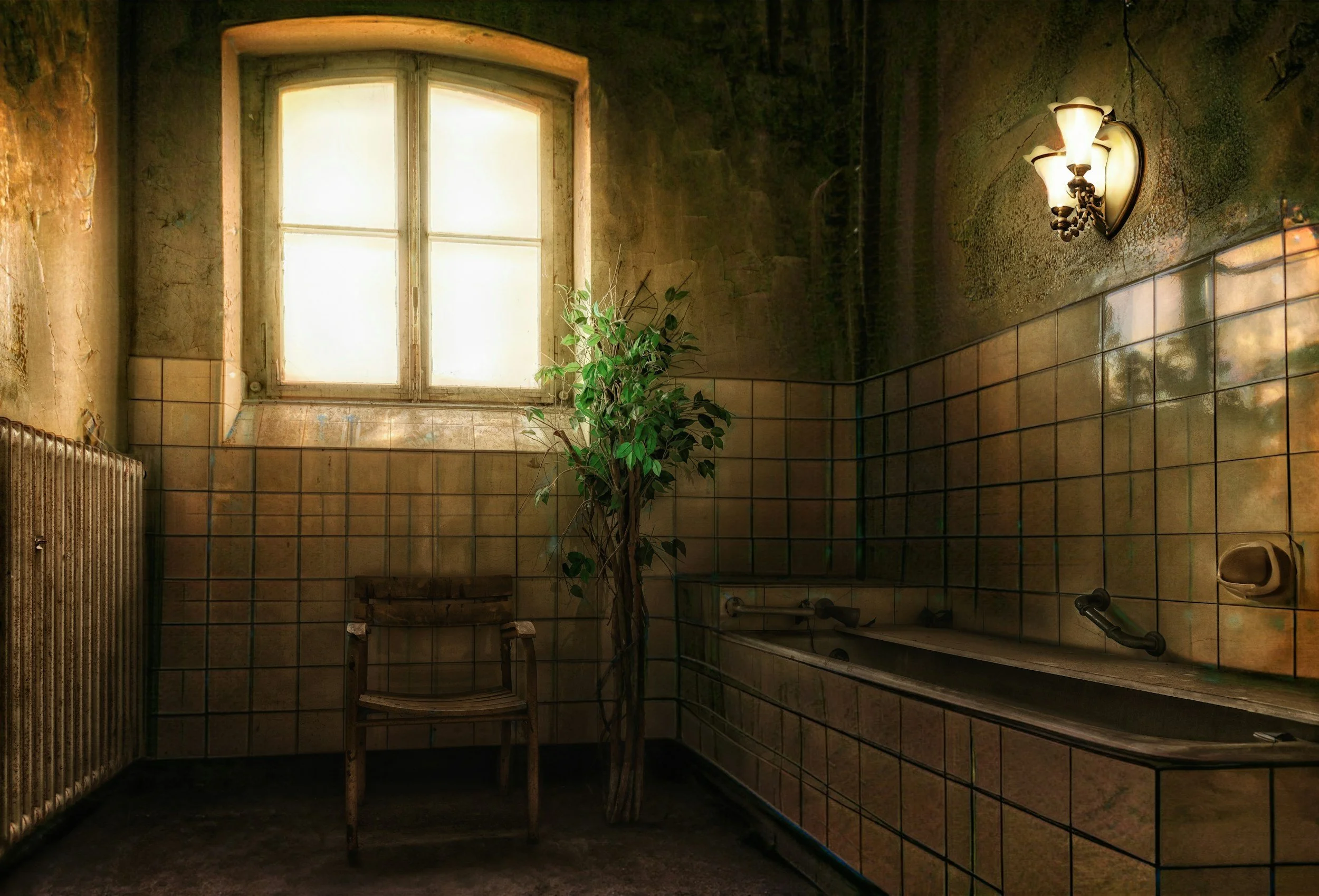
What kind of home is this that allows for such discomfort?
Is everything else in life a performance?
Home certainly includes an element of decay, but decimation?
It would seem that a home is a place that feels real, a place where one can truly be. For this reason, it seems, people choose to leave oppressive homes, or remain in accepting homes. What becomes strangely apparent is that any home can be both of these things. The foreign and the familiar coincide as time passes and growth of people, families, memories confronts decomposition of walls, cities, livelihoods. The home can be unheimlich, can become a non-home, as Annison suggests, but I begin to wonder, do these exist in binary opposition?
No. It is precisely these hostile elements of a home that allow it to be a home.
In example, Olivia Sheringham works with asylum seekers, and cares deeply about their welcome into a new country, a new home. In a similar vein to the songs and poetics we’ve already discussed, she posits that storytelling is the way to side-step victim-hero dynamics, defy hostility, move farther than charity, and focus on welcome. She intends to create a community that uses the structure of ‘being with’ each other rather than one ridden with host-guest binaries. She argues that narratives focusing on triumph over tragedy are debilitating, and finds that through poetics asylum seekers can pass on memories, form a testimony, and cherish a lost home (285-287).
It is precisely what is commonly framed as a horrific, escaped past that, re-framed, is what allows one to continue building their home, while cherishing the what was lost.