“In the broad sense, I speak of an ‘aesthetic of the political,’ to indicate that politics is first of all a battle about perceptible/sensible material.” - Jaques Ranciere, 2000 (8).
*
“In the broad sense, I speak of an ‘aesthetic of the political,’ to indicate that politics is first of all a battle about perceptible/sensible material.” - Jaques Ranciere, 2000 (8). *
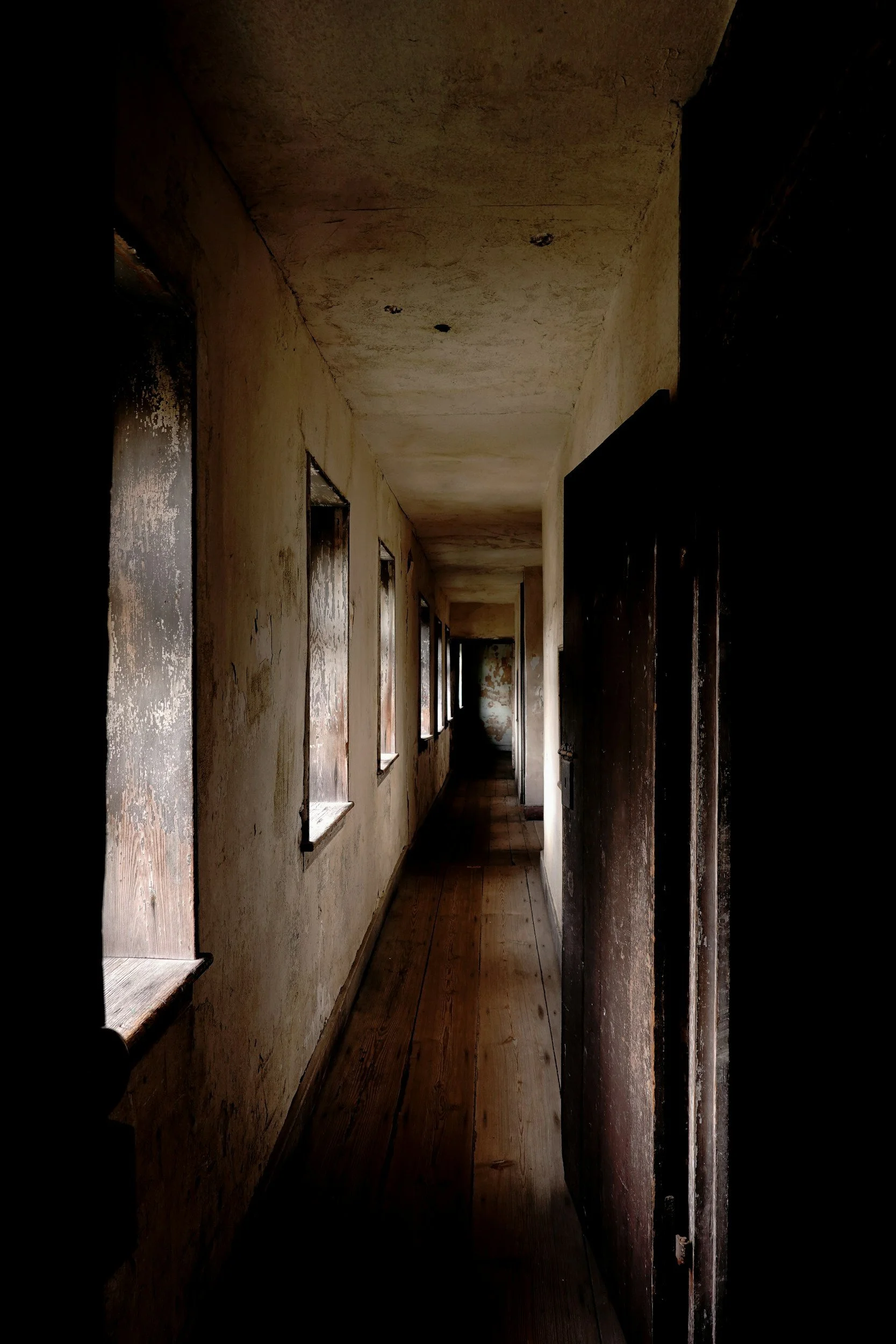
Hallways are places of connection, places inbetween one room and another. They are, at times, dark and adorned with decorations that have watched years of passers hurry by, muttering secrets and breathing deeply before entering a room. They sit quietly.
Jaques Ranciere’s ‘aesthetic of the political’ gets at a politics of materiality that disables a true engagement with people, and rather focuses on imagery, which aides us in our ongoing investigation of home (8). This, coupled with sympathy, is not enough to infuse political discourse with the humanity needed to understand the position of others. The unnamed woman’s words and Genovese’s song effectively punch holes in the lens with which most of us consume media about horror. We fancy ourselves adept at imagining complexity, but none of us expected the woman to connect her critique of Western engagement with politics to a desire of remaining in her home, despite its ongoing danger and destruction.
She’d rather live in peril and hunger, looking her mortality square in the eyes, than live a life that allows her to turn a blind eye. Even the most ‘educated’ among us get to distract ourselves from the horrors, and I do not think we are able to do otherwise, but having experienced the war in Gaza, she cannot bring herself to do the same. It would not be honest. Similarly, Genovese merely comments on his reality, implying injustice, but not verbalizing any sort of desire for a different experience. Though many slaves did, and consequently escaped, this man describes Heaven as the place for promised justice.